Anduril Australia
Lattice
Designing command and control dashboards for one of Australia's most significant autonomous defence programmes
I was the sole designer on a focused team embedded within Anduril's engineering organisation. I was responsible for the end-to-end design of two new dashboard modules within Anduril's Lattice command and control platform, from discovery through to validated designs ready for development.
I worked within Anduril's existing design system, collaborating with their US-based design team, Australian engineering leads, and programme stakeholders.
A$1.7B
Ghost Shark programme investment
2
Dashboard modules delivered
3 months
Discovery to validated designs
The problem
Anduril's Lattice is the AI-powered software platform that provides command and control across their family of autonomous systems. In Australia, their highest-profile programme is Ghost Shark (also known as Dive-XL), an extra-large autonomous underwater vehicle developed with the Royal Australian Navy, representing a A$1.7 billion investment in sovereign maritime capability.
Autonomous underwater assets produce vast amounts of operational data. When our engagement began, the existing approach to monitoring these assets within Lattice wasn't purpose-built for operational decision-making. Operators were presented with large volumes of raw data, most not relevant to their immediate tasks, and there was no consolidated view for managing multiple assets simultaneously.
The brief: Design two new dashboard modules within Lattice, one for single-asset monitoring and one for multi-asset fleet management, giving operators the situational awareness to make quick, informed decisions during mission planning and execution.
Research and discovery
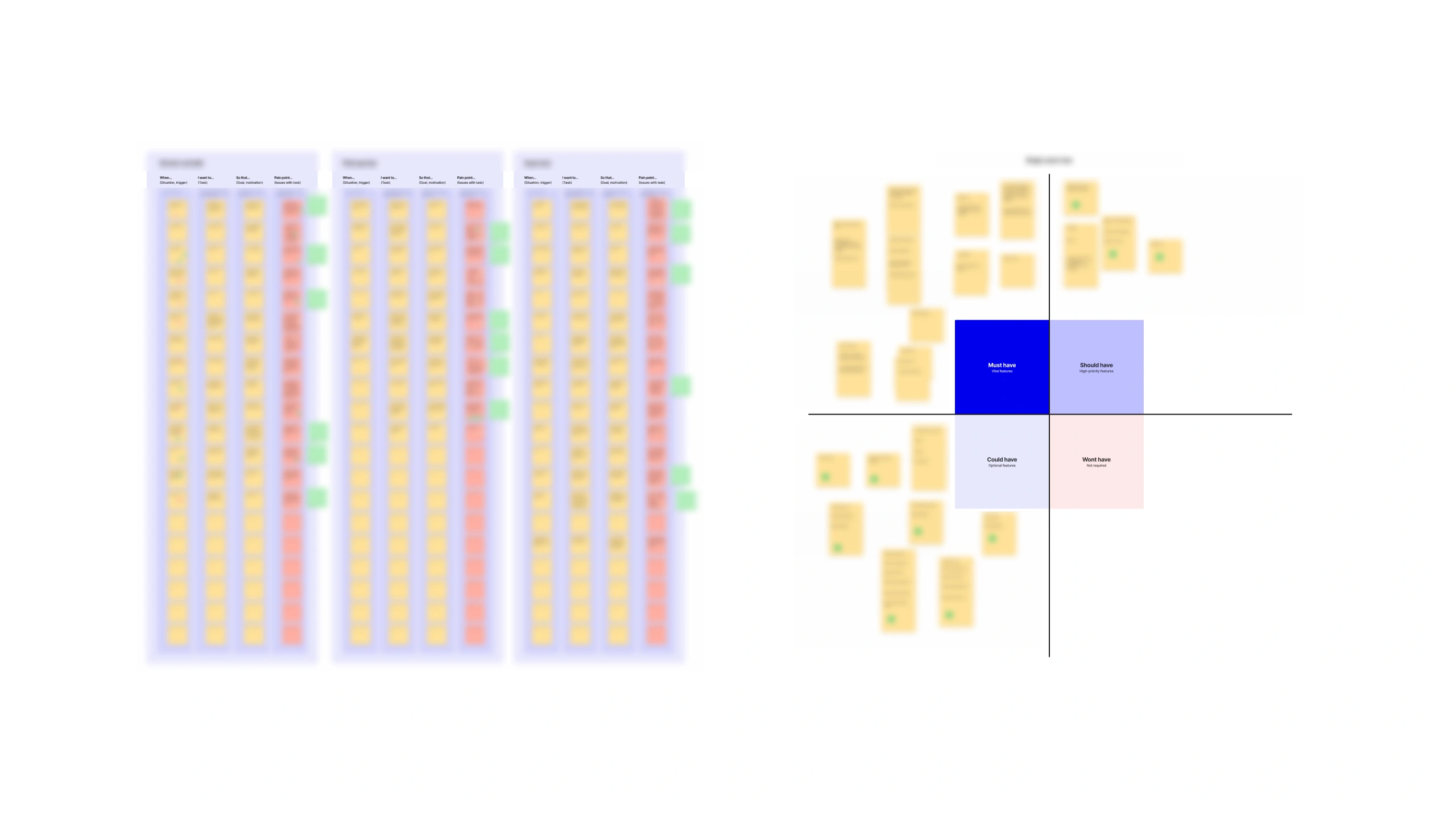
I facilitated three workshops in the opening weeks, each targeting a different dimension of the problem: understanding operators and their decision-making patterns, systematically prioritising which data points mattered most for each dashboard context, and mapping the technical landscape to surface constraints and data availability.
Two insights shaped the direction:
- Single-asset and multi-asset monitoring required separate modules. The decision-making patterns were different enough that trying to serve both in a single interface would have created the same data overload the engagement was trying to solve.
- Data prioritisation was the critical design input. Without a structured exercise to separate what operators needed at a glance from what could be accessed on demand, the dashboards would have reproduced the existing problem in a new layout.